
Fermentation
Fermentation is an ancient and universal food technology.
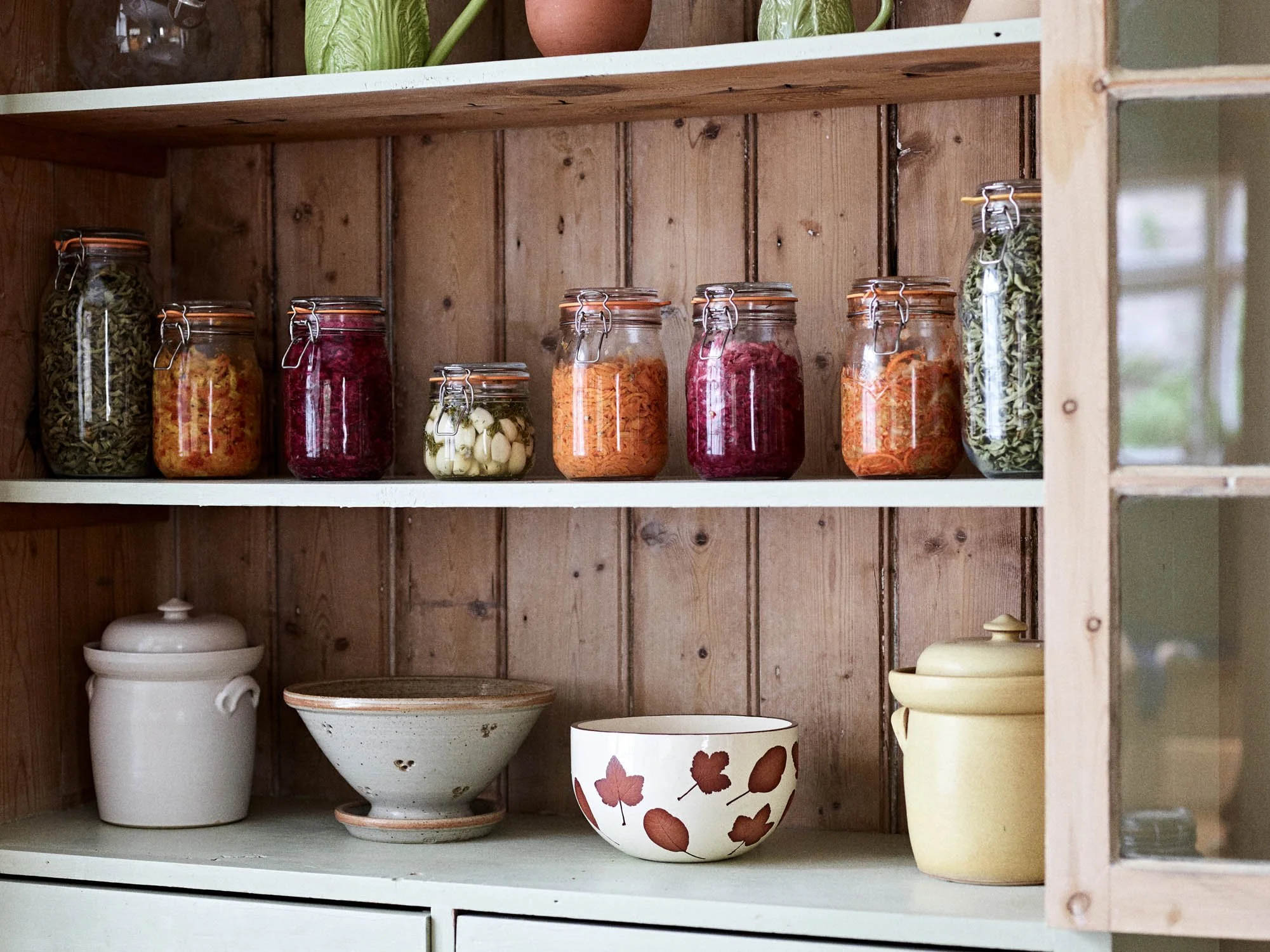
Fermented foods and drinks constitute powerful tools for supporting health. Every culture on Earth ferments; from sauerkraut and kimchi to kefir, kombucha, miso, doenjang and beyond. Fermentation is much more than a food preservation method. Ferments are living, complex ecosystems teeming with beneficial microbes, microbial metabolites, and bioactive plant compounds. Regular consumption of fermented foods and drinks can support health by influencing our gut microbiota, supporting our gut lining and interacting with our immune system, our hormones, our nervous system and more. They are tasty, cheap, easy to make and their health benefits are backed by a rapidly growing body of science.
Making our own ferments reminds us that our existence is intimately interconnected with the microbial world. Microbes shaped our evolution and we depend upon them, not only for our survival, but for the survival of life on Earth. Making your own milk kefir or a jar of sauerkraut is not only an act of reconnection to those invisible microbes and their work, but also an act of reconnection to your ancestors; the generations of humans who have done the same thing across centuries and cultures all over the world. In a world where we are increasingly disconnected from ourselves, each other and our natural environment, fermentation is a joyful, delicious, practical and deeply meaningful way back.

Fermentceutical Research
Around 7 years ago, I had a strange dream about a new word - fermentceutical. With no idea where it might lead, and because my experiments with drying ferments and using the powders continued to absorb and inspire me (and possibly because I used to be a solicitor), I trademarked the term. It basically defines dried lacto-fermented foods. At the time, I was just embarking upon an MSc in nutritional medicine at the University of Surrey. The project module of my MSc constituted a grant proposal for research into a kimchi fermentceutical and in May 2022, my colleague and friend Katy Gordon-Smith and I self-funded and conducted the first phase of research.
This unshakeable idea of mine has now become the focus of a PhD, supervised by Terri Grassby and Kourosh Ahmadi at University of Surrey and Harsh Mathur and John Leech at TEAGASC. Through spending a little time in South Korea to learn more about kimchi and freeze drying, I was fortunate to meet Wooje Lee at the World Institute of Kimchi. Dr Lee is now also very kindly contributing to my work. My first paper, a comparative assessment of specified nutrients and biochemicals in kimchi before and after freeze drying and powdering, is now published open access in Applied Food Research. I am currently designing the final phase of my research, which involves qualitative sensory analysis of fermentceutical. If you want to keep up with developments, do sign up to my newsletter, below.

HOXY Research
Alongside my fermentceutical work, I have been researching a product that represents a melding of my herbal and fermentation practices. Humans have been using vinegar as a solvent to extract the active compounds from plants since Hippocrates time (around 400 BC). An oxymel is a mixture of apple cider vinegar and honey and this, too, has an exceedingly long history of human use as a form of medicine. HOXY is the name I have given to my herbal oxymels.
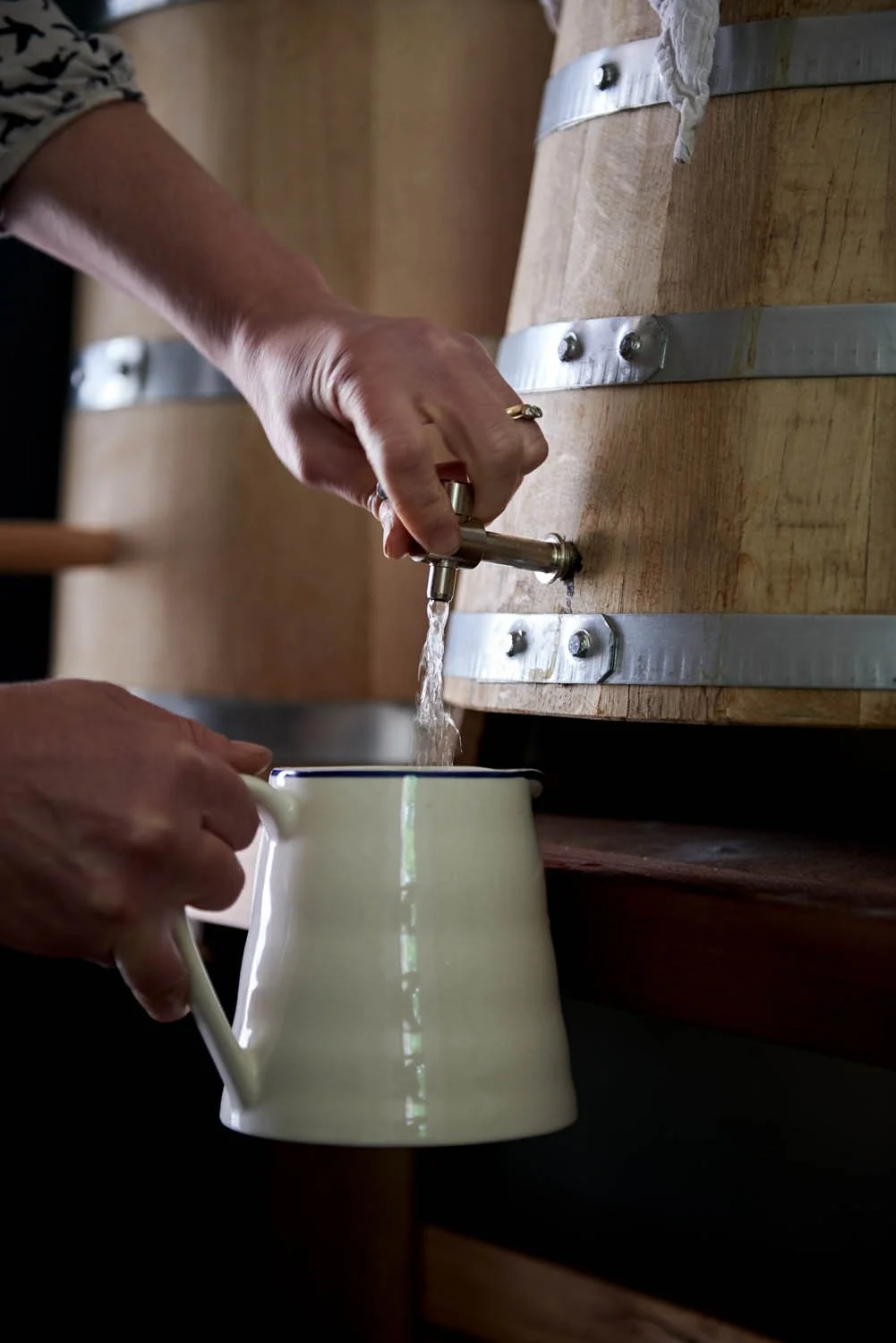
As a herbalist, I normally make my herbal medicine extracts using alcohol as the solvent. I have been making my own apple cider vinegar for some time and I realised that I could, in some cases, effectively use apple cider vinegar as a solvent instead of alcohol. The appeal is multifaceted; some people do not consume alcohol, and we tend to avoid giving alcohol-based tinctures to young children.
In addition, apple cider vinegar and honey are household items for many of us. Reviving the practice of making oxymels enables many of us to make simple but effective herbal medicine without the need for vodka. I am all for fun, practical and effective ways of taking back responsibility for our own health.
I have spent some time developing a range of herbal oxymels using medicinal herbs, at the same time refining the optimal method by which to make them. I am now working with the University of Surrey using LC-MS and HPLC analysis to investigate the presence of key plant biochemicals in HOXYs compared to the equivalent alchoholic extract. The results should clarify the extent to which the HOXY biochemical profile differs from that of the equivalent alcoholic extract.
Follow my work
You can read the published paper on fermentceutical in Applied Food Research
I will provide updates here and through my newsletter as my research progresses, so do sign up to the newsletter.
If you have comments or questions, please do contact me.
